
Melo - Dirty Party Game
Pocket Party Games - PartygeeTrivia
4.615.00 Reviews
- Version
- 2.10.0
- Installs
- 100.00K
- Age Rating
- Mature 17+
Screenshots
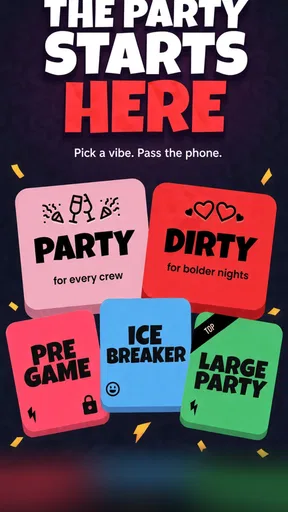
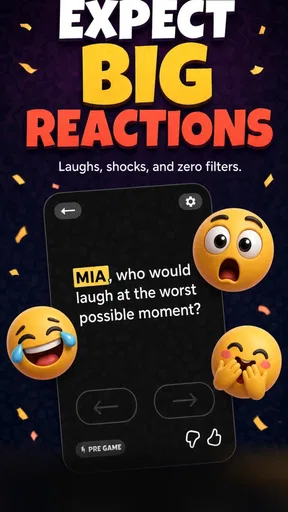

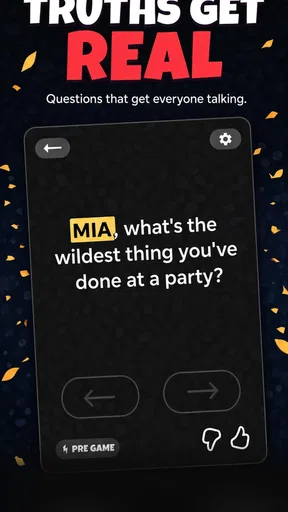
Our Review of Melo - Dirty Party Game
 Analysis by Appyee
I tried Melo - Dirty Party Game with the mindset I use for any party trivia game: not “does it have a lot of content?” but “will it actually get a quiet group talking?” That distinction matters. A large challenge library sounds useful, yet the real test is whether people can understand the rules quickly, whether the tone suits everyone in the room, and whether the phone stays in the background instead of becoming the main event.
Melo is a free mature-rated party game from Pocket Party Games - Partygee. It is built around playful, adult-oriented challenges rather than a traditional question-and-answer quiz. The app has earned a 4.6 average from around 1.9 thousand ratings and has passed 100 thousand installs, which suggests that its straightforward social format has found an audience. My overall impression is positive, but only for the right group: friends who already enjoy teasing, daring, and slightly risqué conversation will get much more from it than families or mixed groups looking for harmless general knowledge.
What I would check before choosing Melo
The first decision is the group itself. The mature 17+ rating is not a minor label here; it should shape who gets invited and when the game is opened. I would not start it at a family gathering, a work event, or with people whose boundaries I do not know well. For a private evening with close friends, however, the adult tone can remove the stiffness that often makes ordinary trivia games feel like a school exercise.
The second question is whether you want knowledge-based competition or social participation. Standard trivia rewards recall: players answer facts, compare scores, and move on. Melo is more useful when the goal is to make people react to one another. Someone may be good at quizzes but uncomfortable with personal prompts, while a quieter friend may become the funniest person in the room once the challenge gives them a clear opening.
I also pay attention to setup friction. A party game loses momentum if everyone must create accounts, learn a complicated scoring system, or pass the phone around while searching through menus. Melo’s appeal comes from being something I can bring out during a lull and explain in a sentence. That makes it better suited to spontaneous gatherings than to a carefully planned tournament with teams, brackets, and a winner who needs a precise score.
There is another practical consideration: the app is free to install, but it includes purchases ranging from $3.99 to $29.99 per item. I would treat the free entry as a chance to judge the tone and replay value before spending anything. In a party setting, one person usually provides the phone, so I would agree in advance that nobody should feel pressured to buy content simply because the group is having fun.
The social format is the real strength
What works best for me is the way a challenge can turn passive guests into participants. A conventional quiz often creates a cycle of reading, answering, and checking. That is fine when the group wants competition, but it can leave people waiting for their turn. A party challenge has a different rhythm: it gives the room a prompt, invites a reaction, and often creates a story that continues after the screen is put down.
That makes Melo particularly effective for a small gathering where everyone knows at least some of the others. The app does not need to carry the entire evening. I would use it in short rounds, then let the conversation develop naturally. Trying to force every challenge one after another could make the experience feel mechanical, while treating each prompt as a spark gives the game room to breathe.
The large library is useful for replay value. With more than 3,000 challenges, the app is not limited to a single first-night novelty. Still, I would not assume that a big number automatically means every prompt will suit every group. The better approach is to skip anything that feels too personal, too repetitive, or simply wrong for the mood. A party game should make it easy to protect the atmosphere, not encourage players to endure an awkward round.
One non-obvious advantage is that the game can help a host manage energy. If conversation is already lively, I would choose a quick challenge and move on. If people are sitting quietly after dinner, I would allow more time for reactions and follow-up stories. In that sense, the app works less like a board game with a fixed pace and more like a supply of conversation starters that I can use selectively.
How I would use it in a real evening
Imagine four friends meeting at home after a long week. Nobody wants to commit to a full movie, and a serious quiz feels too formal. I would open Melo, explain that anyone can decline a prompt without needing to justify the decision, and begin with the least uncomfortable challenges. The first few turns would establish the tone. If people laugh and start adding their own comments, I would continue. If the room becomes hesitant, I would change the activity rather than treating reluctance as part of the game.
I would also nominate one person to hold the phone instead of passing it constantly. That small choice makes the flow smoother and reduces the chance that someone starts reading ahead. The holder can announce the challenge, let the relevant player respond, and keep the screen moving. For a larger group, I would divide the room into loose pairs or small teams, not because Melo requires a formal team system, but because a shared reaction is easier to manage than asking every person to perform alone.
A useful hosting trick is to set a time boundary before starting. I might say we will play for fifteen minutes and then decide whether to continue. This prevents the app from taking over the evening and gives cautious players an easy exit. It also makes the game work well as a warm-up before dinner, a break between activities, or a late-night option when people want something lighter than a competitive board game.
For couples, the experience may be more direct and personal, but I would still avoid assuming that intimacy automatically makes every challenge comfortable. For new friends, the safest route is to keep the early rounds playful and observe reactions. The best use of the app is not to test how far someone can be pushed; it is to create shared amusement without making one guest responsible for everyone else’s entertainment.
Where it beats ordinary trivia and party substitutes
Compared with a standard trivia app, Melo wins when factual knowledge is not the point. A general quiz can reward the person who remembers the most films, geography, or history, but it does not necessarily help strangers connect. Melo’s adult challenge format is more likely to produce a memorable anecdote, an exaggerated reaction, or a friendly argument that continues after the turn.
Compared with a board game, it is easier to bring into an unplanned evening. There is no box to organize and no collection of pieces to lose. That convenience is valuable when the group is already together and the host wants an activity within seconds. The trade-off is that a phone-based game has less physical presence and may feel less special than a well-designed tabletop game for players who enjoy strategy, components, and long sessions.
Compared with conversation-card games, Melo appears better suited to people who want a more mischievous, adult mood. A traditional card deck may offer a calmer experience and a clearer sense of ownership, while this app is more convenient for someone who does not want to buy or store another party product. The choice depends on whether you value portability and a broad digital library or prefer a tactile activity that does not involve a screen.
Compared with drinking games, I see Melo as easier to adapt. Alcohol can be present, but it does not need to be the scoring mechanism or the reason someone participates. That matters because a good party should remain enjoyable for the person who is not drinking. I would never use the challenges to pressure someone into alcohol, physical contact, disclosure, or any other action they have declined.
Where another option may be the better fit
I would skip Melo for a family gathering, a classroom, a professional team event, or any group with a wide age range. The mature rating makes that decision simple. A family-friendly trivia app would be a better match because it can involve children, grandparents, and guests who do not share the same comfort level with adult humor.
I would also choose a conventional quiz game when the group specifically wants measurable knowledge competition. If the evening revolves around teams, scores, categories, and a final winner, a trivia-first product will provide a clearer structure. Melo can create social moments, but I would not select it as the main event for people who want carefully balanced questions and a dependable competitive ladder.
Some players may prefer a card-based alternative if they dislike using a phone during social time. That is a legitimate objection. Even when the app is easy to operate, the device can attract notifications, tempt someone to check another application, or make the host feel like a moderator. A physical deck avoids those distractions and can feel more intentional. Melo is strongest when convenience matters more than removing screens completely.
There is also a personality fit to consider. If your friends avoid personal jokes, dislike being singled out, or tend to interpret dares literally, the app may create more caution than laughter. In that situation, a cooperative puzzle, drawing game, or gentle conversation deck would probably work better. The issue is not that Melo is poorly suited to every group; it is that its value depends heavily on trust and shared boundaries.
Managing purchases, privacy of attention, and replay value
Because the game is free to start and offers paid items, I would make the purchasing decision outside the excitement of a party. Try the available experience with the group, notice whether people ask to keep playing, and then decide whether additional content would genuinely be used. Buying simply because a prompt has created momentum is an easy way to spend more than intended.
The listed current version is 2.10.0, and it supports devices running Android 8.0 or later. That makes checking the phone’s operating system a sensible step before planning an event around it. I would install it before guests arrive, not while everyone is waiting, and test the sound and screen visibility in the room where the game will be played. Those small preparations matter more than they sound: a social game should begin with people, not troubleshooting.
Another useful habit is to keep the phone in a neutral position. I would turn off unrelated notifications if possible, avoid letting players browse ahead, and have the host read only the current challenge. This protects the surprise and keeps the app from becoming an excuse for individual scrolling. The store summary’s idea of choosing memories over doomscrolling is appealing, but it only works if the host actively keeps the device focused on the shared activity.
Replay value will depend on how often you play with the same people. A large challenge collection helps, but friends also learn one another’s patterns. A prompt that surprises everyone on the first night may be predictable later. To extend its life, I would rotate groups, use it as a short part of a broader evening, and avoid exhausting the library in one marathon session. That is a better trade-off than expecting any party app to remain endlessly fresh on its own.
My recommendation for the right kind of group
I recommend Melo to adults planning a relaxed night with friends who enjoy playful embarrassment, quick social prompts, and a flexible pace. It is especially convincing when you need an activity that takes almost no physical preparation and can fill a conversational gap without demanding a full evening. The free starting point lowers the risk, while the mature rating clearly signals that this is not a universal party choice.
I would not recommend it as a family trivia replacement, a serious competitive quiz, or a guaranteed icebreaker for strangers. Those situations call for a safer tone, more predictable rules, or a stronger structure. I would also avoid buying anything until the group has demonstrated that it likes the style of challenge. The app can be a good value for a regular friend group, but its usefulness is tied to actual social chemistry rather than to the size of its library alone.
My final advice is to treat Melo as a host’s tool rather than a complete party plan. Choose the moment carefully, set boundaries openly, let players pass without pressure, and stop while the room is still enjoying itself. Used that way, it does what a good party game should do: it gives people a reason to look up from their phones and create a shared moment. For the right adult group, that is a strong reason to give this trivia-style party game a try.
Verdict
Strengths of Melo - Dirty Party Game
- Quick to learn, making it suitable for spontaneous group gatherings.
- Large variety of prompts helps keep repeated sessions feeling fresh.
- Works well for both small groups and larger parties.
- Encourages conversation and playful interaction between friends.
- Simple interface lets players start a game with minimal setup.
Limitations of Melo - Dirty Party Game
- Some prompts may feel too personal or uncomfortable for certain players.
- The adult-focused content is not appropriate for children or family events.
- Replay value can drop once the group has seen many of the cards.
- Requires players to feel comfortable sharing private or embarrassing answers.
- May not suit quieter groups that prefer structured or competitive gameplay.
Similar Picks in This Category
View All
Millionaire 2026 Quiz & Trivia
Quiz & Trivia Games by Submarine Apps4.5

Brain Test 2: Tricky Stories
Unico Studio4.7

Trivia Crack: Brain Quiz Games
etermax4.4

QuizzLand. Quiz & Trivia game
Quiz & Trivia Games by Mno Go Apps4.8

Brain Test: Tricky Puzzles
Unico Studio4.7

Logo Quiz
bubble quiz games4.5
Frequently Asked Questions
What is Melo - Dirty Party Game, and how is it played?
Melo - Dirty Party Game is a social party game designed for groups of friends who are comfortable with cheeky, daring, and adult-themed prompts. Players usually take turns answering questions or completing challenges, making it easy to start without complicated rules. The experience depends heavily on the group’s sense of humor, openness, and willingness to participate.
Is Melo - Dirty Party Game suitable for children or teenagers?
No. Melo is intended for mature audiences because its questions and challenges may include sexual, suggestive, provocative, or otherwise adult-oriented content. Parents should not consider it a family-friendly game, and younger users should avoid downloading it. Even among adults, it is a good idea to review the content and agree on personal boundaries before beginning a session.
Can Melo - Dirty Party Game be played offline with friends?
The game is primarily designed for in-person group entertainment, so it can be useful during parties, gatherings, or casual evenings with friends. However, some versions or features may depend on the device, app configuration, or an internet connection. Check the store listing and the app’s permissions after installation to confirm whether all decks and modes work offline.
Does Melo - Dirty Party Game contain in-app purchases or advertisements?
Availability of advertisements, premium content, and in-app purchases can vary according to the platform and version of Melo you install. Some party games offer a basic deck for free while locking additional questions or themed packs behind optional payments. Before downloading, review the current Google Play or App Store listing so you understand the pricing, subscriptions, and purchase requirements.
What should players know about privacy and consent before using Melo?
Melo is best enjoyed when every participant feels comfortable and can skip any question or challenge without pressure. Avoid sharing private information, recording other players, or involving anyone who has not agreed to participate. Because the app may request certain permissions depending on the device, review its privacy policy and limit access that is not necessary for the game.
Play our best games!


